
Split Payments 101: A Plain-English Guide for Merchants (Works with Your Existing PSP)
Split payments let multiple customers pay toward one order in a single checkout. Learn how split payments work, top use cases, benefits, and how FairShare integrates with your existing payment provider.

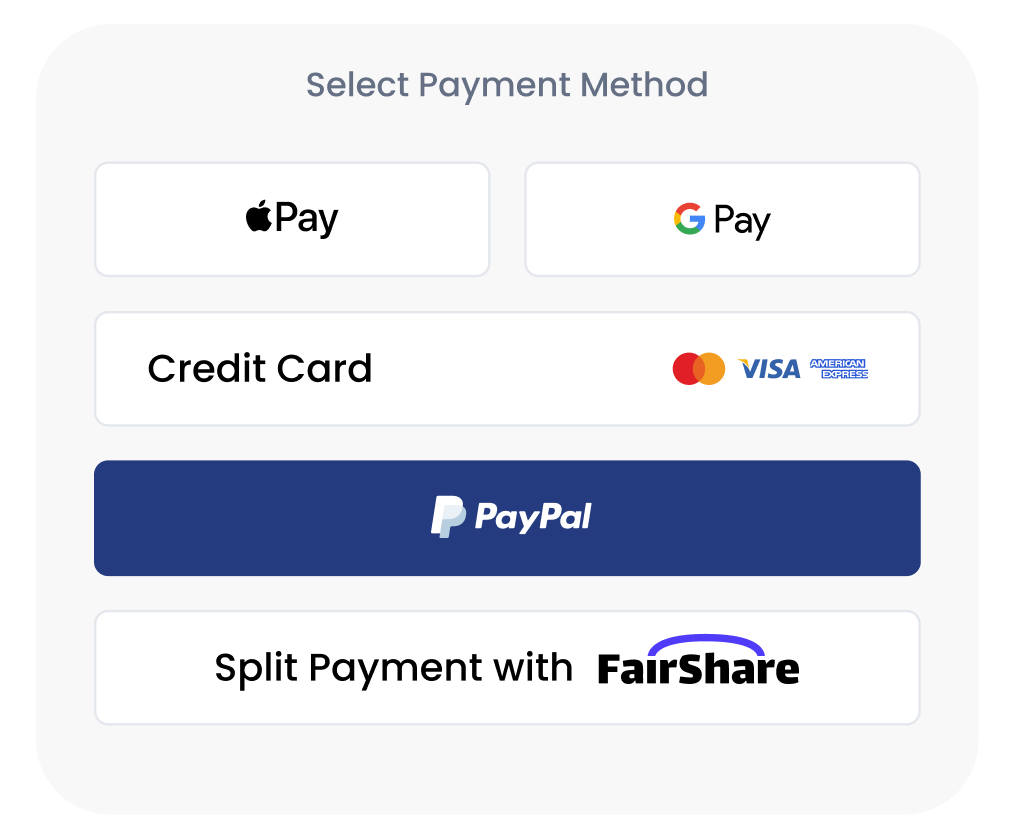
Split payments are one of those features customers instantly understand because many people already split purchases informally. If you need a quick definition, start with what split payments are.
They buy something together, one person pays, then everyone sends money later. That works until it does not. It creates delays, awkward chasing, drop-outs, and abandoned checkouts.
Split payments fix this by letting multiple people pay toward one order inside a single checkout.
For merchants, that means higher conversion on shared purchases, fewer I will pay you back later failures, and multiple customer relationships from one transaction when done properly.
Split payments can work with your existing payment provider
You do not need to throw away the payment provider you already use.
FairShare is designed to be payment-provider agnostic. It connects to your existing provider or providers so you can offer split payments while keeping your current setup for processing, settlement, and reconciliation.
In plain terms:
- You keep your current PSP or multiple PSPs
- FairShare adds the split-payment layer on top
- Each contributor pays their share through the connected provider
- You still see payments in the provider dashboards you already use, plus FairShare's split view to track the full session
What are split payments
Split payments, also called group payments or multi-payer checkout, let multiple customers contribute to one purchase.
Instead of one person paying 100 percent now and collecting money later, you get multiple customers paying their shares directly, tracked under one order or session with a clear paid and remaining progress.
This is different from installments or BNPL where one person pays over time, and different from split settlement where a platform splits funds to multiple recipients.
Split payments are about multiple payers funding a single total.
How split payments work
A typical flow looks like this:
- A lead customer starts a checkout and chooses the product or service
- They choose split payment and set equal or custom amounts
- They invite contributors via link, QR code, or direct invites
- Each contributor pays their share with their own card or wallet
- The order completes when the total is covered based on your rules
- Everyone gets confirmation and receipts
Why merchants add split payments
1) Higher conversion on shared purchases
When people share a cost, the I cannot justify this alone moment becomes this is easy if we split it.
2) Less checkout abandonment
A big reason shared purchases fail is the lead payer does not want to pay everything upfront. Split payments remove that blocker.
3) Faster time-to-purchase
Instead of waiting for reimbursements, contributors can pay in parallel, reducing the chance the buyer loses interest.
4) More customer reach from one checkout
Split checkouts get shared. That means multiple people see your product and brand at the highest-intent moment: payment.
5) Multiple customer profiles from a single order
A normal checkout captures one customer identity. Split payments can capture multiple contributors' details for receipts and follow-ups with proper consent.
Where split payments shine
Split payments work best when a purchase is naturally shared, such as:
- Group gifts
- Household purchases
- Friends buying together
- Teams and communities collecting contributions
- Events and experiences
If customers already say send me the link or we will split it, split payments are a strong fit.
Will this break my current payments setup
No. If implemented correctly, split payments should feel like an upgrade, not a replacement.
With FairShare, you keep your existing PSPs while FairShare orchestrates multiple contributions into one tracked session or order. If you want the broader payments architecture view, see what payment orchestration is.
Your team gets a clear view of who paid what, what is remaining, and the overall status such as pending, partial, completed, or expired.
What a good split payment checkout must include
If you are evaluating split payments, look for:
- Fast join-and-pay for contributors
- Clear progress for paid and remaining amounts
- Flexible splitting with equal and custom amounts
- Deadlines and rules for what happens if someone does not pay
- Receipts and transparency to reduce disputes
- Refund logic that is operationally clean
Split payments only help conversion if they reduce friction, not add it.
Quick FAQ for merchants
Do split payments increase fraud or disputes
Any payment method can have disputes. The key is transparency with clear item or service descriptions, receipts, and contribution records.
What if someone does not pay their share
Common options include session expiry, the lead customer covering the remainder, or confirming only when fully funded. The policy should be visible inside checkout.
Will customers find it confusing
Most do not because the concept is familiar. The UI must make how much do I pay and what happens next extremely clear.
The takeaway
Split payments let customers buy the way they already behave, together.
For merchants, it is a practical lever to increase conversion on shared purchases, reduce abandonment caused by upfront burden, expand customer reach through shareable checkout, and build multiple customer relationships from a single order.
With FairShare, you can offer split payments while continuing to use your existing payment provider, so you improve checkout without rebuilding your entire payments stack. That same provider-agnostic model is part of payment orchestration.